
At the heart of Karnataka’s Ballari-Sandur iron-ore belt lies Vijayanagar, home to a thriving industrial-cum-community ecosystem built by JSW Steel and supported by JSW Foundation. What began over two and a half decades ago as a steel plant has gradually evolved into a broader socio-economic ecosystem, combining industrial strength with community welfare, infrastructure, education, and social services.
Manufacturing Backbone – From Steel to Cement and Energy to Paints
JSW Steel Vijayanagar Works occupies roughly 10,000 acres in Toranagallu in Ballari district and is recognised as India’s largest integrated steel plant and one of the world’s largest integrated steel plants. Its installed capacity stands at 17.5 million tonnes per annum (MTPA), making it a major contributor to India’s steel supply.
The plant boasts advanced facilities, including India’s widest hot-strip mill and one of the largest blast furnaces. Its design emphasises sustainability: it holds a “zero-effluent discharge” status and recycles more than 95% of process waste. In addition, 96% of coke-oven gas is reused for power generation, reducing carbon footprint and improving resource efficiency.
On the cement side, JSW Cement plays a critical role in strengthening Vijayanagar’s industrial ecosystem by aligning raw material access with value-added production capacity. In 2009, JSW commissioned its manufacturing unit in Vijayanagar, Karnataka, and launched its PSC cement operations in the state, marking a key milestone in the region’s industrial expansion and supporting major infrastructure and construction projects across South India.
At Vijayanagar, JSW Energy operates a power portfolio of more than 1.1 GW, spanning thermal, solar (including floating solar), and hybrid power solutions. This integrated energy hub delivers stable, high‑quality power to one of India’s largest industrial ecosystems. The portfolio is rapidly expanding, underpinned by advanced renewable integration and an operational on‑site green hydrogen facility, supporting JSW Group’s transition towards low‑carbon energy solutions.
JSW Paints currently has its Decorative Paints facility at Vijayanagar in Karnataka with a capacity of 1,50,000 KL per annum. The facility is equipped with highly automated production lines and advanced technologies designed to deliver consistent quality across the company's wide portfolio of interior, exterior, wood, metal and waterproofing. With a strong emphasis on sustainability, the plant focuses on water-based, low-VOC, and solvent-free paints that are family friendly and safe for the environment. This commitment extends to innovations such as ergonomic, roller-friendly rectangular packaging designed to reduce waste and optimise storage while enhancing efficiency and environmental responsibility in modern paint solutions for Indian homes.
This strategic development created strong operational synergies among steel cement and paints manufacturing, and energy, allowing for efficient resource utilisation, streamlined logistics and reduced production fragmentation. By co-locating core heavy industries within a single industrial corridor, Vijayanagar has evolved into one of the most robust and integrated industrial backbones in South India, capable of supporting both national infrastructure growth and regional economic stability. Through this industrial foundation, Vijayanagar continues to generate employment, regional economic activity, and resources that enable larger community investments.
Vidyanagar Township: A Model Industrial Community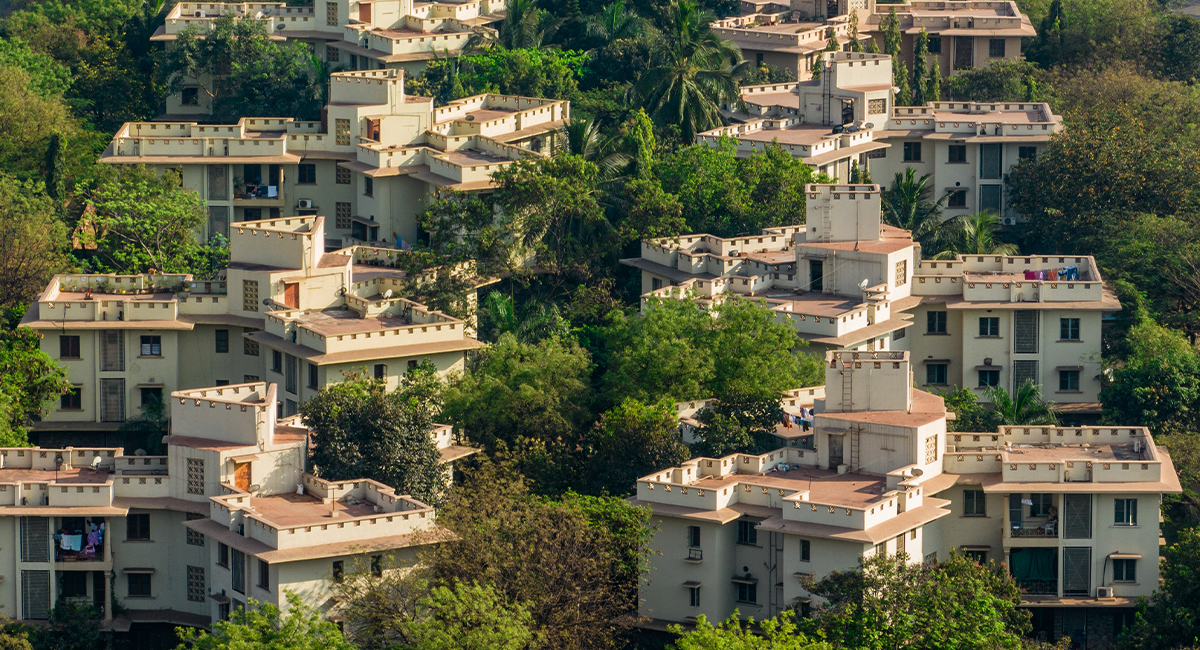
The success of Vijayanagar is also defined by the carefully planned development of its residential ecosystem through the Vidyanagar Township model. The township has been designed on a contoured site with compact, inward-looking housing clusters that promote a strong sense of community while preserving privacy between residences. Apartments are structured across 1, 2 and 3 BHK formats, arranged in concave-shaped clusters that naturally create shared central courtyards, play areas and seating spaces, encouraging daily social interaction in a bright and lively environment.
Every residential cluster has been designed with functional and human-centric planning. Personal backyard gardens at the ground level and open terraces on upper floors integrate nature into everyday living. At the same time, the separation of pedestrian and vehicular pathways enhances safety for children and elderly residents.
The township is encircled by a 12-metre-wide peripheral ring road, linked to 6-metre-wide internal roads, with dedicated service roads behind each building to ensure smooth logistics without disrupting residential life. Distinctive, brightly coloured entrance gateways provide identity to each housing cluster, while integrated water bodies serve both aesthetic and rainwater catchment functions.
This township philosophy is further strengthened by JSW Realty, which focuses on sustainable community infrastructure planning. Green spaces, mobility access, educational institutions and medical facilities are integrated rather than treated as isolated functions, creating a balanced and liveable industrial community.
Unlike traditional industrial belts, the township model ensures that workforce well-being and family life remain central to regional growth, demonstrating how industrial zones can be transformed into inclusive, human-first living environments.
Education and Skill Development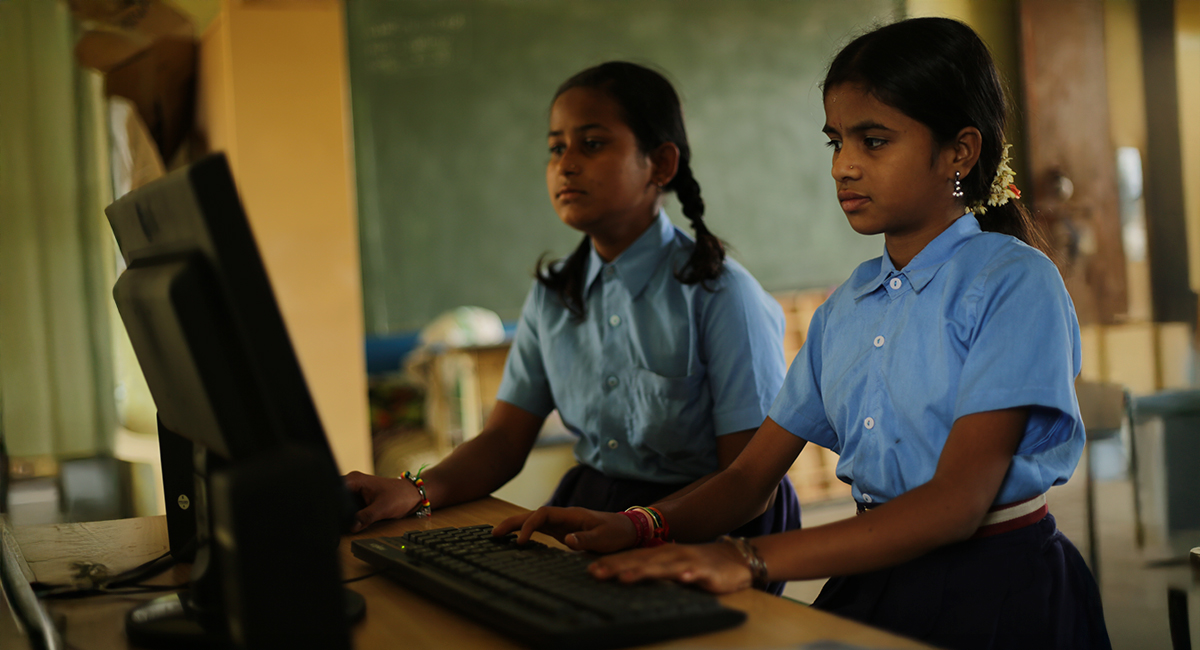
JSW Foundation adopts a lifecycle approach to learning, addressing education from early childhood through school years and into livelihood-linked skill development. Its interventions span early childhood care, foundational literacy, school infrastructure, teacher capacity-building, and employability readiness, ensuring continuity rather than isolated support.
Strengthening Literacy
At the foundational stage, the Foundation implements Early Childhood Care and Education (ECCE) initiatives and programmes such as Room to Read, which builds cluster-level libraries to promote reading habits. JSW Aspire further strengthens literacy, numeracy, and life skills, addressing learning gaps early in a child’s development. A key systemic intervention is the Karnataka Model School Pathways Programme, implemented across six districts in North Karnataka in collaboration with the Government of Karnataka. Under this programme, all participating schools receive spoken English instruction, digital classrooms, and science laboratories. Notably, 80% of enrolled children actively use Foundational Literacy and Numeracy (FLN) modules, while teachers and principals are trained in 21st-century skills and change management, improving both classroom outcomes and school leadership.
Vocational Training
Education outcomes are reinforced through livelihood-oriented skilling, particularly for women. Under Project Charkha, women trained in handloom techniques across four centres earn ₹20,000–₹25,000 per month, while tailoring units produce over one lakh uniforms annually, directly linking education with sustainable livelihoods.
Developing School Infrastructure
Complementing academic interventions, JSW Foundation has undertaken extensive school infrastructure development, including construction of classrooms, school buildings, and community facilities in locations such as Gadignur (Vijayanagar), Nagalapura, Garaga, Gunda Thanda, and MM Halli.
In addition, Jindal Vidya Mandir (JVM) is a flagship educational institution established in 1996 in Vijayanagar under the aegis of JSW Foundation and managed by the Jindal Education Trust. JVM is an English-medium school affiliated with the Central Board of Secondary Education (CBSE) and offers comprehensive education from Lower Kindergarten to Class XII, with a large and diverse student body progressing within a structured academic environment.
The school’s mission centres on promoting quality education and all-round development, with strong emphasis on academics, co-scholastic activities, and community values, supported by well-designed infrastructure, smart classrooms, laboratories, and a technology-enabled learning environment.
Sports Excellence at Inspire Institute of Sports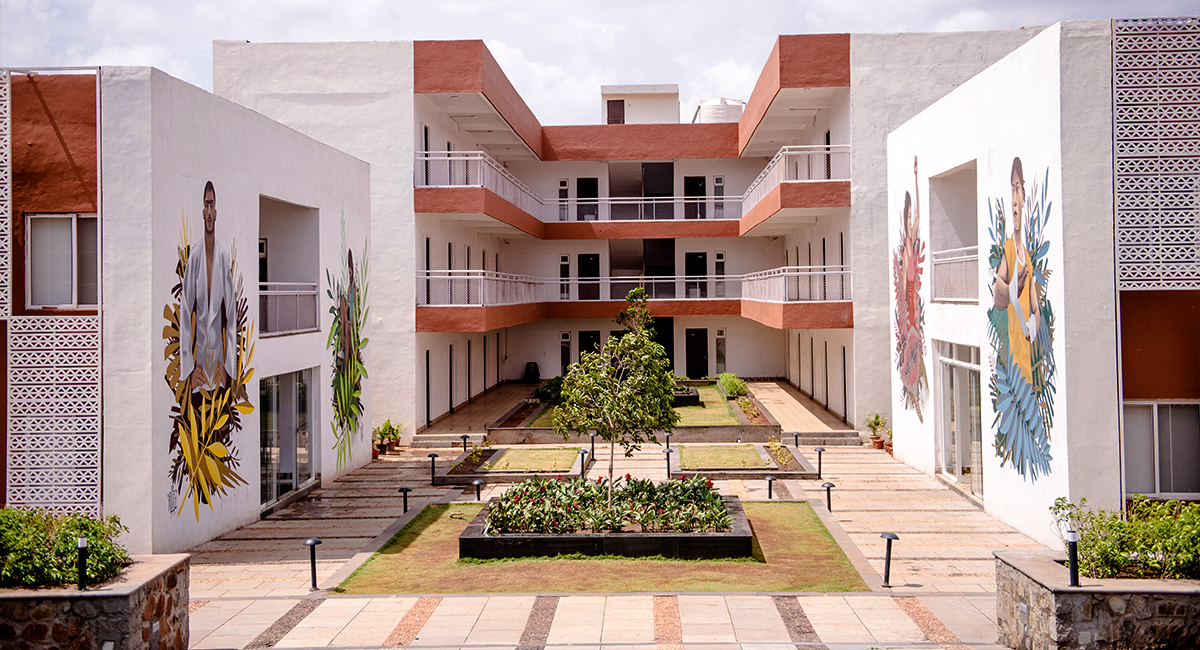
Sporting ambition and holistic human development form a core pillar of JSW Foundation’s social vision. Through the Inspire Institute of Sports (IIS) and allied grassroots initiatives, Vijayanagar-linked and surrounding rural communities gain access to structured training pathways, early talent identification, and sustained exposure to competitive sport.
Beyond elite high-performance systems, JSW Foundation actively nurtures rural and school-level sports participation. As highlighted in its rural sports programmes, students are trained in Mallakhamb, an indigenous sport requiring exceptional strength, balance, and agility. In eastern India, the Odisha School Swimming Programme has enabled school students to formally register and train under structured swimming curricula in Bhubaneswar, expanding access to aquatic sports at the grassroots level.
The Foundation has also established Project Shikhar, under which high-altitude boxing academies have been set up to provide specialised training environments that build endurance, strength, and competitive readiness among young athletes from hill regions.
At the elite end of the spectrum, IIS has trained 150+ athletes across five major sports disciplines, offering access to world-class coaching, sports science, and performance monitoring. This integrated sports ecosystem ensures that Vijayanagar’s development extends beyond industrial and educational growth, embedding physical fitness, discipline, and national sporting aspiration into the fabric of community life.
Healthcare Services and Community Well-being
Healthcare access forms a critical pillar of JSW Foundation’s community development approach, particularly in and around industrial locations such as Vijayanagar. To address immediate and long-term health needs, the Foundation operates mobile health vans across Karnataka, Odisha, Maharashtra, Rajasthan, Himachal Pradesh, and Tamil Nadu, ensuring medical outreach to remote and underserved populations. These services are supported by free ambulance networks, which play a vital role in responding to medical emergencies, trauma cases, and road accidents.
At the community level, clinics established in Karnataka, Maharashtra, and Odisha act as the first point of contact for healthcare, offering preventive, diagnostic, and curative services for common ailments. Institutional healthcare is anchored by JSW Sanjeevani Hospitals located in Vijayanagar and Dolvi, strengthening access to secondary and tertiary care.
JSW Foundation also runs large-scale public health programmes, including preventive oncology initiatives in Maharashtra that screen for oral, breast, and cervical cancers, as well as safe motherhood programmes providing free institutional deliveries. Additional interventions include vision correction, prosthetic support for cancer patients, neurological care, hole-in-the-heart corrective surgeries, and clubfoot corrections. Ongoing infrastructure investments include a 50-bed multi-speciality hospital in Koida, a 400-bedded Mother & Care Hospital (MCH) wing at VIMS, Ballari, and the St. Elizabeth Hospital in Mumbai, expected to be commissioned by December 2026.
Vijayanagar: Industry Meets Inclusive Growth
Vijayanagar stands out as a living demonstration of how industrial might and social responsibility can create a sustainable, multi-dimensional community. From heavy-duty steel and cement production to township living, education, sports infrastructure, and healthcare welfare, JSW Group, with the support of JSW Foundation, has woven a model of development that balances growth with human dignity.
This integrated model transforms Vijayanagar into more than just a production centre; it becomes a community built for the future, where families, youth, workers and communities can all thrive.
Vijayanagar isn’t just a location: it’s a vision of how industry, infrastructure, and inclusive development can shape India’s tomorrow—responsibly, sustainably, and humanely.
View all newsBUSINESSES
JSW Steel JSW Energy JSW Infrastructure JSW Cement JSW Ventures JSW Paints JSW Realty JSW Defence JSW Dulux


