
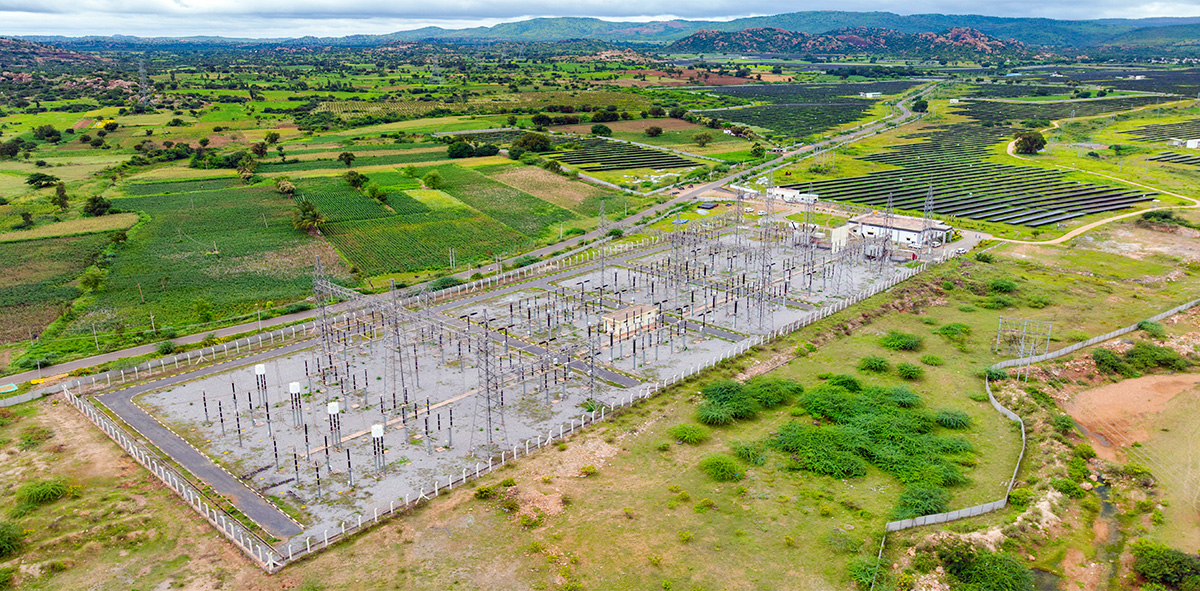
Sustainability in heavy industry is easy to promise and hard to deliver. It demands consistent action across operations, supply chains, products, and governance - simultaneously, at scale. JSW Group is doing exactly that.
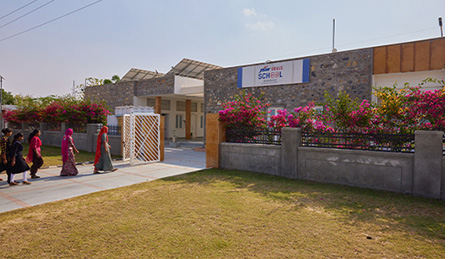
At JSW Group, sustainability is a core driver of growth strategy - shaping how the Group allocates capital, operates assets, and builds long-term competitiveness. Across its businesses, sustainability is embedded into decision-making frameworks, enabling the Group to deliver resilient growth while addressing emerging environmental and social priorities.
As regulatory expectations tighten, capital flow increasingly aligns with ESG performance, and customers demand low-carbon solutions, JSW’s approach reflects a clear strategic intent: to align competitiveness with sustainability outcomes at scale.
The integrated approach ensures that sustainability initiatives not only reduce environmental impact but also enhance operational efficiency, strengthen market positioning, and unlock new growth opportunities.
JSW’s sustainability journey is anchored in a robust governance architecture designed to translate ambition into measurable outcomes. A Group-wide Sustainability Framework spanning 17 ESG focus areas - covering climate, water, biodiversity, human rights, and business ethics - provides a unified direction across all businesses. This framework is informed by a comprehensive double materiality assessment, ensuring alignment with both business priorities and stakeholder expectations.
Board-level oversight, executive accountability, and monthly performance reviews ensure continuous tracking of key ESG metrics. At JSW Steel, the Climate Action Group (CAG) plays a central role in driving decarbonisation strategy and operational execution across plants.
This governance-led approach ensures that sustainability is not episodic, but embedded into decision-making, capital allocation, and day-to-day operations.
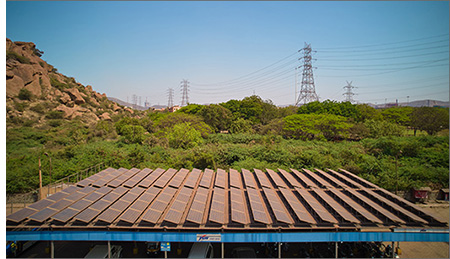
JSW recognises that decarbonisation requires a multi-pronged approach combining operational efficiency, fuel transition, and renewable energy expansion.
Project SEED at JSW Steel targets 18 million tonnes of CO₂ reduction by 2030, leveraging digital optimisation and process efficiency. Advanced systems enhance energy utilisation and emissions management across facilities. At JSW Cement, AI-driven models optimise thermal efficiency, reducing fuel intensity in real time.
Alternative fuels are delivering tangible benefits. Biomass substitution and biochar integration have reduced emissions while supporting local circular economies. At the same time, JSW Cement continues to scale co-processing of waste, achieving a thermal substitution rate of 17.6% and industry-leading emissions intensity.
Renewable energy is a critical pillar of this transition. JSW has commissioned significant wind and solar capacity and is scaling towards 10 GW by 2030. The Group is also advancing green hydrogen, with an operational 25 MW facility supporting low-carbon steelmaking, marking a key step in future-ready industrial decarbonisation.
Importantly, JSW continues to balance this transition with energy security, optimising thermal assets to ensure reliability and affordability while progressively reducing carbon intensity.
JSW’s diversified portfolio enables a unique circular economy model where by-products from one business become inputs for another. This systems approach reduces waste, conserves natural resources, and lowers environmental impact.
JSW Steel has developed a first-of-its-kind process to convert blast furnace slag into manufactured sand, reducing landfill dependency and curbing river sand extraction. The Group is also scaling plastic waste utilisation and enhancing scrap usage, supported by a 0.5 MTPA scrap recycling facility in Maharashtra.
These initiatives demonstrate how industrial ecosystems can be redesigned to maximise resource efficiency while generating economic value.
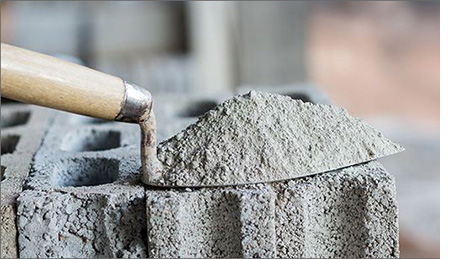
Sustainability increasingly shapes customer preferences, and JSW is aligning its product offerings accordingly.
JSW Steel’s GreenEdge product portfolio enables customers to reduce Scope 3 emissions through verified low-carbon steel solutions. JSW Cement’s blended products deliver lower embodied carbon without compromising performance, while JSW Paints focuses on low-VOC, water-based formulations that improve environmental and health outcomes.
Collectively, these efforts position JSW as a preferred partner in low-carbon value chains, reinforcing the link between sustainability and market competitiveness.
JSW is also addressing emissions and impact beyond the factory gate. Through JSW Infrastructure, the Group is reducing logistics-related environmental footprint via improved cargo handling, dust mitigation, and energy-efficient port operations.
Investments in slurry pipelines, coastal shipping, and electrified internal logistics are reducing dependence on road transport, lowering emissions and minimising community impact. Simultaneously, a Digital Supply Chain Assessment programme is driving ESG performance across suppliers, identifying risks and embedding sustainability into procurement decisions.
What distinguishes JSW is not any single initiative, but the consistency with which sustainability is integrated across every facet of the business—from energy and materials to products and supply chains.
By aligning governance, technology, and operational execution, JSW is transforming sustainability from a compliance requirement into a core driver of resilience, efficiency, and long-term competitiveness.
At JSW, sustainability is not an adjunct to business strategy—it defines it. By embedding ESG into core operations, the Group is strengthening resilience, improving efficiency, and unlocking long-term growth. This approach reflects a clear conviction: sustainability is not a trade-off to growth, but a fundamental driver of it.
View all newsBUSINESSESS
JSW Steel JSW Energy JSW Infrastructure JSW Cement JSW Ventures JSW Paints JSW Realty JSW Defence JSW Dulux


